Removal of stretch marks, tattoos, scars, and hemangiomas
Removal of Stretch Marks, Tattoos, Scars and Hemangiomas – Belgrade Polyclinic. Modern treatment methods provided by an experienced medical team. Book your consultation!
The removal of stretch marks, tattoos, scars, and hemangiomas includes various aesthetic and reconstructive procedures aimed at improving the appearance and quality of the skin. These changes can occur due to different life circumstances, injuries, surgeries, or congenital factors, and their treatment requires careful assessment and the selection of an appropriate method.



-

-

- Plastic surgery
-
- Removal of stretch marks, tattoos, scars, and hemangiomas
-
- Removal of stretch marks, tattoos, scars, and hemangiomas








What is the removal of stretch marks, tattoos, scars, and hemangiomas?
Modern aesthetic medicine allows us to use the most advanced laser technology to address aesthetic concerns that previously required invasive surgical procedures. Our clinic uses highly precise medical lasers that target pigmentation, damaged tissue, or vascular changes, stimulating the skin’s natural regeneration process. Whether it involves unwanted tattoos, acne or injury-related scars, stretch marks that affect skin texture, or vascular changes such as hemangiomas, our approach ensures maximum precision, safety, and gradual restoration of smooth and even skin tone.
Before and after treatment assessment
Before starting any series of treatments, a professional consultation is necessary, during which our team evaluates your skin type, the characteristics of the change (color, depth, age of the scar or tattoo), and the expected results. After each treatment, the skin requires proper care and protection from UV radiation, and through a series of follow-up examinations, we monitor your progress until the desired goal is achieved. Our focus is on an individualized treatment plan adapted to your skin’s regeneration process, ensuring optimal aesthetic results without compromising skin health.
Preparation for treatment
Preparation for laser treatments is minimal but essential. We recommend avoiding direct sun exposure or tanning beds for at least two weeks before treatment to ensure that the skin is in optimal condition for laser energy. Upon arrival, the doctor will cleanse the treatment area and, if necessary, apply a topical anesthetic cream to make the procedure completely comfortable and painless. In the treatment room, everything is designed around your comfort and the effectiveness of the process.
Type of anesthesia
Most laser treatments are very well tolerated and require only superficial (local) anesthesia in the form of a cream. This cream effectively reduces the sensation of stinging during laser application, allowing you to remain fully awake and relaxed. In cases where larger areas or more sensitive body parts are treated, especially in individuals with lower pain tolerance, additional skin cooling techniques are applied to ensure maximum comfort without the need for more invasive forms of anesthesia.
Treatment process
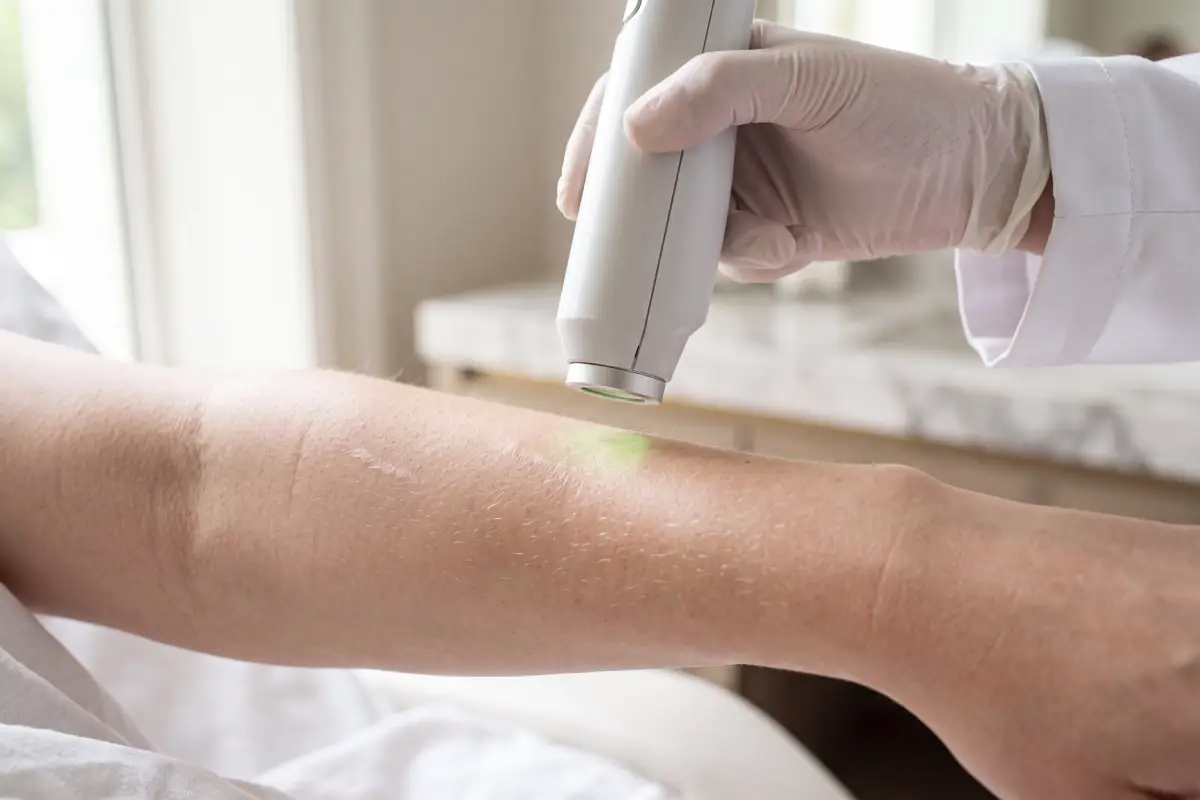
After applying the anesthetic cream, the doctor directs the laser beam onto the targeted area. The laser energy acts selectively – for tattoos, it breaks down pigment particles that the body then naturally eliminates; for scars and stretch marks, it stimulates collagen production and skin texture renewal; while for hemangiomas, it coagulates blood vessels without damaging surrounding tissue. The treatment is quick, and thanks to the advanced laser cooling system, the sensation on the skin is reduced to mild tingling. After completion, the treated area is protected with soothing products.
Recovery after treatment
Recovery is quick and simple. After treatment, mild redness or swelling may appear in the treated area, which usually resolves within 24 to 48 hours. It is essential to follow advice regarding sun avoidance and the use of high-SPF protection throughout the regeneration period. While the skin is healing, avoid harsh exfoliation or irritating treatments, allowing the natural renewal processes to restore smoother and more even skin.
Prices
Payment

Cash - directly before the procedure
Via a dinar or foreign-currency account
RIA, Western Union or MoneyGram
About us
Poliklinika “Beograd” provides professional medical care in the field of plastic, aesthetic, and reconstructive surgery, with a special focus on procedures for correcting and removing unwanted skin changes. Our practice includes treatments for the removal of stretch marks, tattoos, scars, and hemangiomas, using modern methods and an individually tailored approach for each patient.
From the initial consultations to the completion of treatment, we provide patients with comprehensive support, detailed explanations, and a treatment plan adapted to their needs. Each procedure is carefully assessed according to the type of skin change, its size, location, and desired results. Our goal is to improve the appearance of the skin while achieving a natural, harmonious, and long-lasting aesthetic effect.
Frequently Asked Questions
With modern procedures, it is possible to treat various aesthetic skin imperfections, including stretch marks, unwanted tattoos, scars resulting from injuries or surgeries, as well as certain types of hemangiomas. The choice of method depends on the type of change, its appearance, size, and location.
The removal of stretch marks involves the application of an appropriate method that improves the appearance of the skin and reduces their visibility. The procedure is selected depending on the age of the stretch marks, their color, depth, and the condition of the patient’s skin.
Tattoo removal depends on several factors, such as the color and amount of pigment, the depth at which the ink was applied, the size of the tattoo, and the skin type. In some cases, a tattoo can be significantly removed or made almost unnoticeable, but the number of treatments required depends on individual characteristics.
The tattoo removal procedure is performed using appropriate technology that targets the pigment in the skin. Mild discomfort may occur during the treatment, and after the procedure, the patient receives instructions for proper care of the treated area.
Scars cannot always be completely removed, but their appearance, texture, and visibility can be significantly improved through various methods. The goal of treatment is to make the scar less noticeable and more harmonious with the surrounding skin.
Different types of scars can be treated, including scars resulting from surgeries, injuries, burns, and other skin changes. The treatment method depends on the characteristics of the scar itself and the assessment of the specialist.
Hemangiomas are changes in blood vessels that may be present from birth or develop later in life. The method of removal depends on the type, size, and location of the hemangioma, and the decision on the most appropriate method is made after an examination.
The sensation during the procedure depends on the type of treatment and the individual sensitivity of the patient. Depending on the method, local anesthesia or other forms of discomfort relief may be used to make the treatment as comfortable as possible.
The number of treatments required depends on the type of lesion being removed, its size, depth, and the skin's response to the procedure. During the consultation, the specialist assesses the condition and provides a recommendation for the optimal treatment plan.
The goal of the procedures is to improve the appearance of the skin with minimal risk of new changes. After the treatment, temporary redness, sensitivity, or swelling may occur, which subside as part of the skin’s recovery process.