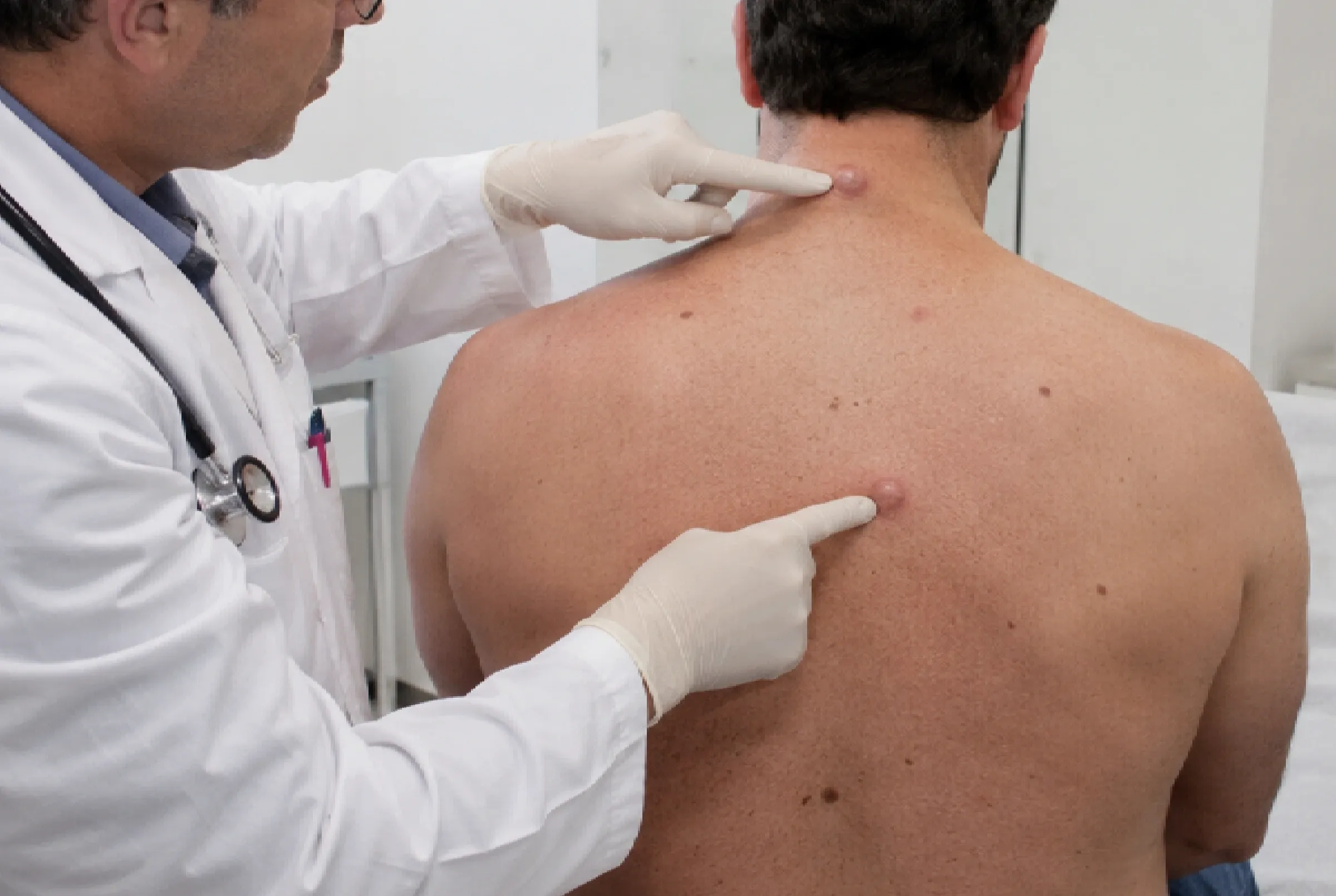




An atheroma that has sat quietly under the skin for years can change overnight: it becomes red, warm, tense, and painful. This is a sign that it has become inflamed, and in that state it often cannot be removed right away in the usual way. In such situations, the doctor considers an incision, a short procedure used to treat the inflamed lesion.
In this text, we explain what an atheroma incision is, when it is considered, how it differs from complete removal, and how you can schedule an examination at Clinic Belgrade.
What is an atheroma incision?
An atheroma is a benign subcutaneous cyst that forms when a sebaceous gland becomes blocked and loses its natural outlet. It most often appears on the head, neck, back, and chest. While it is quiet, it does not have to cause problems, but it can become inflamed, irritated, or painful.
An incision is a procedure in which the inflamed lesion is opened and treated. It is performed under local anesthesia, and the patient leaves the clinic immediately after the procedure. When there is inflammation or infection, the approach requires additional care and treatment before the definitive removal of the atheroma.
When is an incision considered, and when is complete removal?
The decision depends on the current condition of the lesion and is made at the time of examination.
When the atheroma is quiet, the solution is complete removal together with the capsule. This is the key to a successful operation, because the cyst can form again if even the smallest part of the capsule remains in the tissue.
When the atheroma is inflamed or infected, treatment of the inflammation is needed first. The surgeon assesses whether an incision is necessary, and the definitive removal is planned once the condition has calmed down.
That is why an inflamed atheroma should not be squeezed or treated at home, and an examination should be scheduled as soon as possible.
What do the procedure and recovery look like?
The procedure is a minor outpatient intervention performed under local anesthesia. After the procedure, the wound is protected with a sterile dressing. The patient returns to daily activities right away, while avoiding heavy physical exertion until the healing process is fully complete.
Follow-up visits and the further plan, including the timing of complete atheroma removal, are determined by the surgeon based on the condition of the lesion.
Atheroma incision price
The price of atheroma removal at Clinic Belgrade starts from 12,000 dinars. The final amount is determined individually and depends on the size and depth of the atheroma, its location on the body, its current condition (inflammation or infection) and the number of lesions. If inflammation has occurred, additional treatment may be needed before the definitive removal.
You can check the official and informational prices of all examinations on the Price list page.
You can pay in cash at the clinic’s counter, by transfer to a dinar or foreign currency account, or through the services RIA, Western Union and MoneyGram, which is especially useful for patients from abroad.
Risks of atheroma incision
Like any intervention, the treatment of an atheroma carries certain risks. The most important is the reformation of the cyst, which can occur if part of the capsule remains in the tissue. Complications that accompany any surgical procedure are also possible, such as bleeding, wound infection, and scarring. The surgeon discusses all of this with you before the procedure.
Why choose Clinic Belgrade?
Many years of surgical experience, work in strictly controlled conditions, and a dedicated approach to every patient contribute to the safety of the procedure and a good aesthetic result. Complete preparation, consultations, and the procedure are all carried out at one location in New Belgrade, which makes organization much easier for patients. To see what the results look like, check the before-and-after gallery.
How can you contact us?
Schedule an appointment, a consultation, or a photo assessment of the lesion by calling +381 11 301 80 81 or via Viber and WhatsApp at +381 66 301 801, every day from 8 am to 9 pm.