











ECG Holter monitoring
5.999
RSD
Holter ECG | Polyclinic Belgrade
ECG Holter Monitoring – Polyclinic Belgrade. 24-hour monitoring of heart rhythm and cardiac activity with an experienced cardiologist. GREAT PRICE✓ Book!


The Holter ECG is a modern, non-invasive diagnostic method that continuously monitors the electrical activity of the heart over an extended period of time, most often 24 to 48 hours and, if necessary, even longer. During the examination the patient wears a small portable device that records the heart's activity under everyday conditions – during activity, rest and sleep.
Unlike a standard ECG examination, which lasts only a few minutes, the Holter ECG allows long-term monitoring of the heart rhythm and helps detect transient disturbances that may not occur during an examination in the doctor's office.
The Holter ECG is most commonly used to:
The examination is painless and safe. After the wearing of the device is completed, the physician analyzes the recorded data and, based on the results, provides an expert opinion and recommendations for further monitoring or treatment.
The Holter ECG is a modern, non-invasive diagnostic method that continuously monitors the electrical activity of the heart over an extended period of time, most often 24 to 48 hours and, if necessary, even longer. During the examination the patient wears a small portable device that records the heart's activity under everyday conditions – during activity, rest and sleep.
Unlike a standard ECG examination, which lasts only a few minutes, the Holter ECG allows long-term monitoring of the heart rhythm and helps detect transient disturbances that may not occur during an examination in the doctor's office.
The Holter ECG is most commonly used to:
The examination is painless and safe. After the wearing of the device is completed, the physician analyzes the recorded data and, based on the results, provides an expert opinion and recommendations for further monitoring or treatment.
Holter ECG is recommended when there is a need for detailed monitoring of the heart's activity and detection of changes in heart rhythm that cannot always be recorded during a standard ECG examination.
The most common symptoms and reasons for performing a Holter ECG examination include:
Holter ECG allows the doctor to analyze the heart's activity during everyday activities and, based on the results obtained, to assess whether there are rhythm disorders and whether further treatment or additional diagnostics is needed.
ECG Holter monitoring

Cash - directly before the procedure
Via a dinar or foreign-currency account
RIA, Western Union or MoneyGram
Poliklinika „Beograd“ has been providing expert medical care and support to patients from various fields of medicine for more than two decades. Since its founding in 2004, we have been dedicated to providing quality healthcare services through modern diagnostics, expert examinations and an individual approach to every patient.
Our team consists of experienced specialist physicians, including experts in the field of cardiology, who apply modern methods for the assessment and monitoring of heart health. The Holter ECG examination enables continuous monitoring of the heart rhythm under everyday conditions, which contributes to more precise detection of heart function disorders and the timely determination of appropriate treatment.
A Holter ECG is a non-invasive diagnostic method that continuously monitors the electrical activity of the heart over 24 hours or a longer period. It enables the doctor to perform a detailed analysis of the heart rhythm under everyday living conditions.
A Holter ECG is recommended for symptoms such as heart palpitations, skipped heartbeats, dizziness, a feeling of faintness, chest pain, shortness of breath, as well as when heart rhythm disorders are suspected.
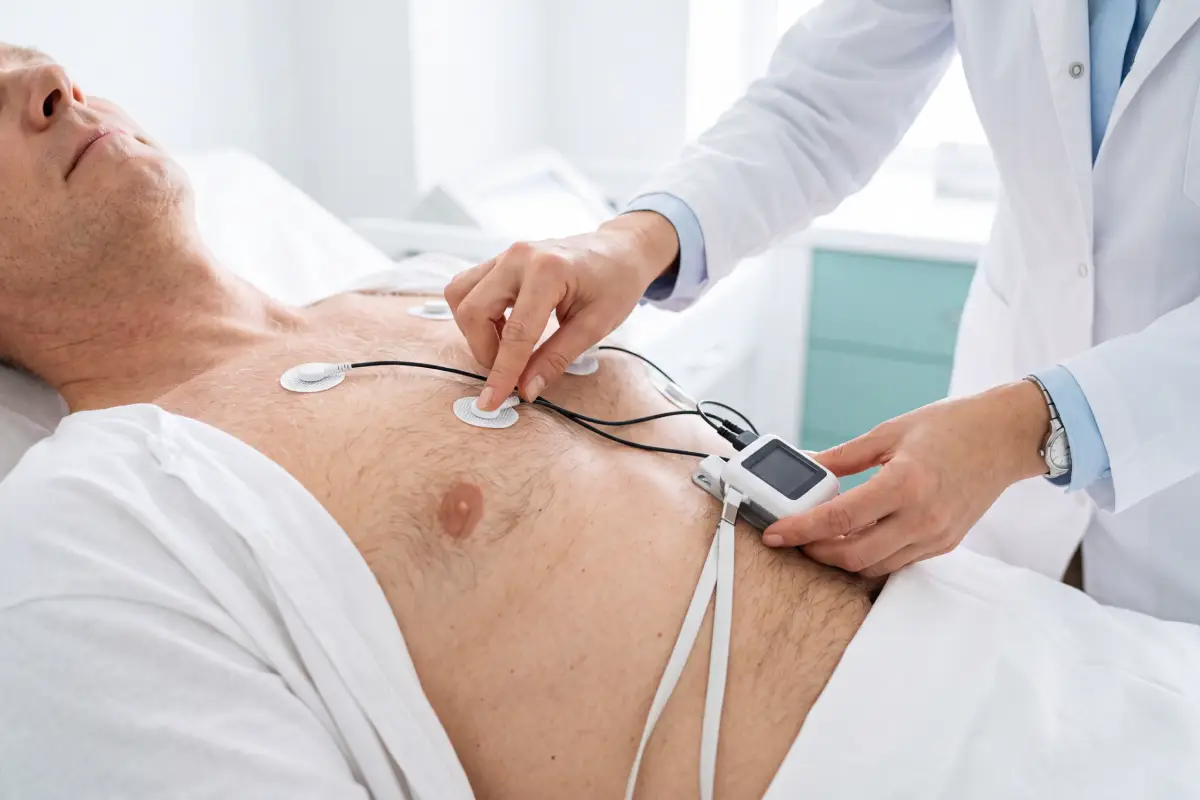
Small electrodes are placed on the skin of the chest, connected to a portable device that the patient wears during the recording period. The device records the heart's activity while the patient carries out their usual daily activities.
A Holter ECG device is most often worn for 24 to 48 hours, but as recommended by the doctor, monitoring can last longer, depending on the symptoms and the need for diagnostics.
No. The examination is completely painless and safe. The patient can carry out most everyday activities normally while wearing the device.
Special preparation is generally not required. Before the device is placed, the doctor gives instructions on how to wear it and how to behave during the examination.
Yes. The device is also worn during sleep so that the doctor has a complete picture of the heart's activity at different periods of the day and night.
A Holter ECG can detect various heart rhythm disorders, such as a fast, slow, or irregular heartbeat, as well as changes that are not visible on a standard ECG examination.
Yes. The patient is advised to note the time at which any symptoms appear, the activities they were performing, and other important information, so that the doctor can compare them with the recorded heart tracing.
After the recording is completed, the doctor analyzes the recorded data and provides an expert opinion, as well as recommendations for further monitoring, additional diagnostics, or therapy if needed.
Precise diagnosis of the heart rhythm is important for the early detection of heart function disorders and the correct choice of therapy. At Poliklinika Beograd we provide expert cardiac examinations, modern diagnostics and an individual approach to every patient.
Our patients place their trust in us because of:
Would you like to book an appointment or consult with us? Contact us via Viber or WhatsApp 24/7.

The best aesthetic surgeons in Serbia and the region.
The most affordable surgery prices.



Links
Services
Services
Our partners
Prijatelji sajta