











Stress test
8.000
RSD
Stress Test | Polyclinic Belgrade
Stress Test – Polyclinic Belgrade. Heart stress test with monitoring of heart rate and blood pressure during physical exertion. TOP PRICE✓ Schedule an appointment!
The stress test (exercise test) is a non-invasive diagnostic method that assesses the function of the heart during physical exertion. During the examination, the heart function, heart rhythm, blood pressure and ECG recording are monitored, which enables the detection of disorders that may not manifest at rest. The stress test plays an important role in the diagnosis of coronary heart disease, the assessment of the patient's physical capacity and the monitoring of the effects of cardiological treatment.


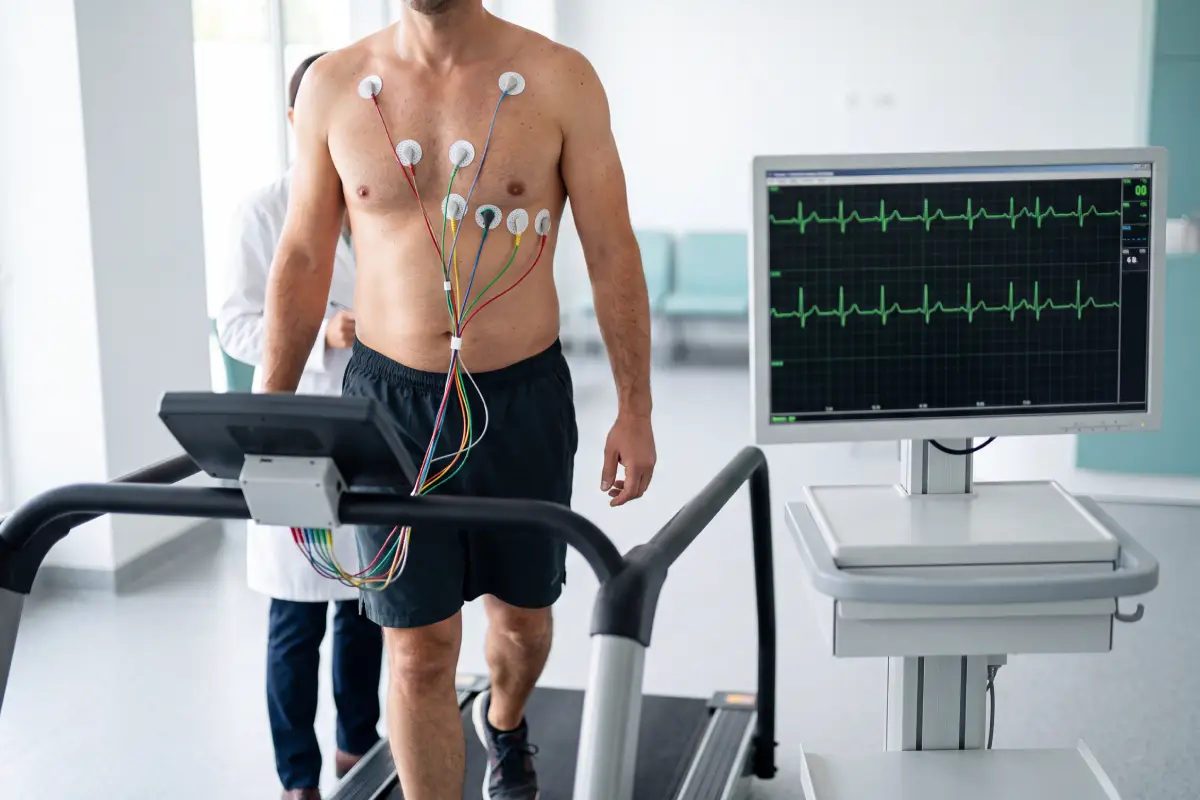
The ergo test, also known as the stress test, is a non-invasive diagnostic method used to assess the work of the heart during physical exertion. During the examination the patient walks on a treadmill or rides a stationary bicycle, while the physician continuously monitors the ECG recording, the heart rhythm, the blood pressure and the heart's response to a gradual increase in load.
This examination makes it possible to detect changes that often cannot be seen at rest and plays an important role in the diagnosis of coronary heart disease, heart rhythm disorders and the assessment of the patient's physical fitness. The ergo test is also used to monitor the effects of therapy, to assess the condition after cardiological interventions and to determine a safe level of physical activity.
The ergo test is most often recommended for:
The examination lasts approximately 20 to 30 minutes, is painless and is carried out under the constant supervision of a cardiologist, who upon completion of the examination interprets the results and provides recommendations for further treatment or additional diagnostics.
The ergo test, also known as the stress test, is a non-invasive diagnostic method used to assess the work of the heart during physical exertion. During the examination the patient walks on a treadmill or rides a stationary bicycle, while the physician continuously monitors the ECG recording, the heart rhythm, the blood pressure and the heart's response to a gradual increase in load.
This examination makes it possible to detect changes that often cannot be seen at rest and plays an important role in the diagnosis of coronary heart disease, heart rhythm disorders and the assessment of the patient's physical fitness. The ergo test is also used to monitor the effects of therapy, to assess the condition after cardiological interventions and to determine a safe level of physical activity.
The ergo test is most often recommended for:
The examination lasts approximately 20 to 30 minutes, is painless and is carried out under the constant supervision of a cardiologist, who upon completion of the examination interprets the results and provides recommendations for further treatment or additional diagnostics.
An exercise stress test is recommended when there are symptoms that may indicate a heart disorder, especially during physical exertion. The examination makes it possible to assess how the heart works under load and helps detect heart conditions that are not apparent at rest.
The most common symptoms and reasons for performing an exercise stress test include:
Based on the results of the exercise stress test, the cardiologist assesses how the heart responds to physical exertion and, if necessary, recommends further diagnostic procedures, therapy or a treatment plan.
Stress test

Cash - directly before the procedure
Via a dinar or foreign-currency account
RIA, Western Union or MoneyGram
For more than two decades, Poliklinika „Beograd“ has been providing expert medical care and support to patients in the field of prevention, diagnosis and treatment of various health conditions. Since its founding in 2004, we have been dedicated to providing quality healthcare services using modern diagnostic methods and an individual approach to every patient.
Our team is made up of experienced specialist physicians, among whom are experts in the field of cardiology, who perform modern cardiological examinations such as the ergo test. With careful monitoring of the work of the heart during physical exertion, we enable a precise assessment of cardiovascular health, early detection of possible problems and timely determination of the appropriate method of treatment or monitoring of the patient's condition.
An exercise test, or stress test, is a cardiological diagnostic method used to monitor the work of the heart during physical exertion. During the examination, the doctor monitors the ECG, heart rhythm, blood pressure, and the heart's response to exertion.
An exercise test is recommended when coronary heart disease is suspected, in cases of chest pain or tightness, shortness of breath during exertion, heart palpitations, heart rhythm disorders, as well as for monitoring existing heart conditions.
During the examination, the patient walks on a treadmill or rides a stationary bicycle while the heart's activity is simultaneously monitored via an ECG. The exertion is gradually increased, and the doctor monitors the body's response to the effort.
No. An exercise test is not painful, but as the exertion increases, the patient may feel fatigue, a rapid heartbeat, or mild shortness of breath, which is an expected response to physical effort.
The test itself most often takes about 10 to 15 minutes, while the entire examination, including preparation, placement of electrodes, and a conversation with the doctor, can take about 30 minutes.
Before the examination, light clothing and footwear suitable for physical activity are recommended. The patient should follow the doctor's instructions regarding taking therapy before the examination.
An exercise test can indicate changes in the heart's function during exertion, heart rhythm disorders, and possible signs of reduced blood flow to the heart muscle.
Before performing the test, the doctor assesses the patient's health condition and decides whether the examination is appropriate and safe.
An exercise test is performed by experienced cardiology specialists with constant monitoring of the patient and modern diagnostic equipment.
The results are analyzed after the examination is completed, and the cardiologist provides an expert opinion and recommendations for further treatment, follow-ups, or additional diagnostics if necessary.
Choosing an institution for cardiological diagnostics is important for a precise assessment of the work of the heart and the timely detection of possible disorders. At Poliklinika Beograd we provide expert cardiological examinations, modern diagnostics and an individual approach to every patient.
Our patients place their trust in us because of:
Would you like to book an appointment or consult with us? Contact us via Viber or WhatsApp 24/7.

The best aesthetic surgeons in Serbia and the region.
The most affordable surgery prices.



Links
Services
Services
Our partners
Prijatelji sajta